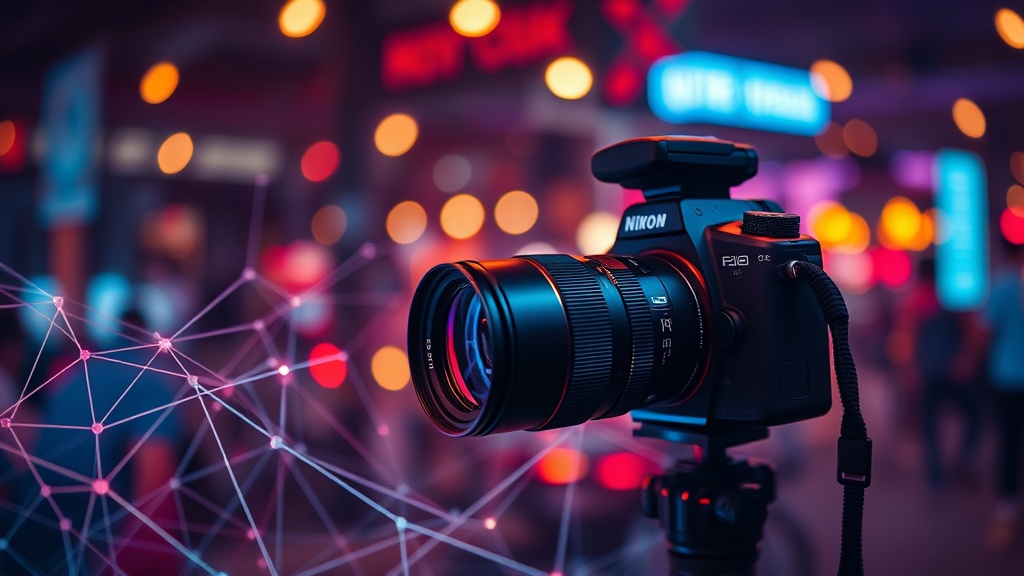
Can AI Actually Replace Your Professional DSLR? A Deep Dive into Mirrorless vs. Computational Photography
The prevailing myth in the consumer electronics market is that "computational photography" is a direct substitute for optical physics. Marketing departments for companies like Apple and Google will tell you that their latest Neural Engine or custom ISP (Image Signal Processor) can bridge the gap between a tiny sensor and a professional-grade full-frame sensor. They are wrong. While AI can certainly mask the physical limitations of a smartphone, it is performing a series of clever mathematical deceptions, not capturing raw light data with the fidelity of a dedicated camera.
To understand why, we have to look at the fundamental difference between capturing a single high-fidelity frame and stitching together multiple low-fidelity frames. A mirrorless camera, such as the Sony α7 IV or the Canon EOS R6 Mark II, relies on the sheer volume of photons hitting a large physical sensor. A smartphone relies on an algorithm to guess what those photons would have looked like if the sensor were actually larger.
The Physics of Light vs. The Math of Algorithms
The core of the debate lies in the Signal-to-Noise Ratio (SNR). When you are shooting in a low-light environment—say, a dimly lit jazz club in New Orleans or a dimly lit interior in a London pub—a professional sensor has a massive advantage. A full-frame sensor has a surface area significantly larger than the 1/1.3-inch sensor found in an iPhone 15 Pro Max. This larger surface area allows for more photons to be captured, resulting in a cleaner signal with less thermal and electronic noise.
Computational photography attempts to solve this via Multi-frame Noise Reduction (MFNR). When you press the shutter on a high-end smartphone, the device actually takes a burst of images at different exposures and uses AI to align them, averaging out the noise. While this works exceptionally well for a static shot of a sunset over the Grand Canyon, it fails the moment there is high-speed movement. If you try to capture a professional soccer match or a fast-moving pet using only computational tricks, you will see "motion ghosting" or "smearing" where the AI fails to reconcile the disparate frames.
The Bokeh Problem: Real vs. Simulated
The most frequent point of contention is bokeh—the aesthetic quality of the out-of-focus areas in an image. In a mirrorless system, bokeh is a product of optical physics. By using a wide aperture, such as an f/1.2 or f/1.8 lens, the light naturally falls off, creating a smooth, organic transition from the subject to the background. This is a physical property of the glass and the sensor distance.
Smartphone "Portrait Modes" use a combination of Depth Maps and Semantic Segmentation. The AI identifies the edges of a subject—the strands of hair, the rim of a glasses frame—and applies a Gaussian blur to everything else. The failure points are glaringly obvious upon close inspection:
- Edge Inconsistency: The AI often struggles with complex edges like translucent fabric or frizzy hair, resulting in a "cut-out" look that feels artificial.
- Unnatural Transitions: In a real lens, the blur is a gradient. In computational photography, you often see a sharp line where the blur begins, which the human eye recognizes immediately as a digital artifact.
- Foreground Errors: If an object is partially obscuring the subject, the AI frequently fails to calculate the depth correctly, either blurring the foreground object or leaving it unnaturally sharp.
Where AI Actually Wins: The Practical Advantages
It is not all bad news for the smartphone. If we move away from the "purist" mindset of professional photography and look at utility, AI is undeniably superior in several workflows. If your goal is to get a "good enough" photo for Instagram or a professional LinkedIn headshot without carrying a heavy bag, computational photography is your best friend.
HDR (High Dynamic Range) Mastery: Modern smartphones are incredibly adept at capturing detail in both the brightest highlights and the darkest shadows. While a mirrorless user might need to shoot in 14-bit RAW and spend an hour in Adobe Lightroom to recover details from a bright sky, a smartphone does this instantly through bracketed exposure stacking. For the average user, the "instant" HDR of a flagship phone produces a more usable image than a poorly exposed RAW file from a professional camera.
Automated Subject Tracking: While professional cameras have made massive strides in AI-driven autofocus, smartphones have perfected the art of "zero-effort" tracking. The ability to tap a screen and have the software instantly recognize a human face, an animal, or even a vehicle, and maintain focus through software-based predictive algorithms, makes it much more accessible for non-specialists.
The Cost of "Smart" Photography
When you buy a $1,200 smartphone, you aren't just buying a phone; you are buying a highly optimized, closed-loop ecosystem. You cannot upgrade the lens on an iPhone or a Google Pixel 8 Pro. You are stuck with the hardware you purchased. In contrast, the mirrorless ecosystem is modular. If you find your 35mm lens is too slow for low light, you can upgrade to a faster prime lens without replacing the entire camera body.
Furthermore, there is the issue of File Integrity. A professional photographer wants a RAW file—a data-rich file that contains the maximum amount of information from the sensor. Most smartphone "RAW" modes (like Apple ProRAW) are actually "processed RAW" files. This means the phone has already applied sharpening, noise reduction, and color grading. When you try to push these files in post-production, you hit a wall. The "baked-in" processing makes the image brittle, leading to heavy artifacts and color banding when you try to adjust exposure or white balance significantly.
A Comparative Breakdown: The Data Points
To move beyond opinion, let's look at how these two technologies handle specific technical challenges:
| Feature | Mirrorless (Optical/Physical) | Smartphone (Computational/AI) |
|---|---|---|
| Low Light Performance | High (based on photon count/sensor size) | Moderate (based on frame stacking/AI noise reduction) |
| Depth of Field | Organic, physical gradient | Simulated, edge-detection dependent |
| Post-Processing Flexibility | High (True RAW data) | Limited (Processed/Baked-in data) |
| Speed of Workflow | Slower (Requires manual settings/editing) | Instant (Automated HDR and color) |
| Subject Tracking | Highly accurate (Hardware-based AF) | Highly intuitive (Software-based AF) |
The Verdict: When to Use Which?
The question isn't whether AI can replace a DSLR or mirrorless camera; the question is whether you need to replace it. If you are a professional delivering high-resolution assets for print, large-scale digital billboards, or high-end commercial work, the answer is a resounding no. AI cannot currently replicate the micro-contrast and color depth of a high-quality glass lens and a large-format sensor.
However, if your workflow involves capturing high-quality content for social media, travel blogging, or daily documentation, the gap is closing faster than most realize. The "intelligence" of the camera is actually a feature, not a bug, for those who value speed and convenience over absolute control.
My recommendation:
- Buy a Mirrorless System if: You want to control the physics of your image, you need to shoot high-speed action without artifacts, or you intend to print your work in large formats. Invest in a Sony α7 series or Fujifilm X-T5 and a few prime lenses.
- Stick to a High-End Smartphone if: You prioritize portability, instant sharing, and "good enough" results with zero technical overhead. Use your phone for the "moment," but don't expect it to win any technical photography awards.
Don't let the marketing hype convince you that a chip can replace a lens. A chip can mimic a lens, but it cannot replicate the truth of the light. Use the tool that fits your specific objective, not the one that has the flashiest AI specifications on the box.