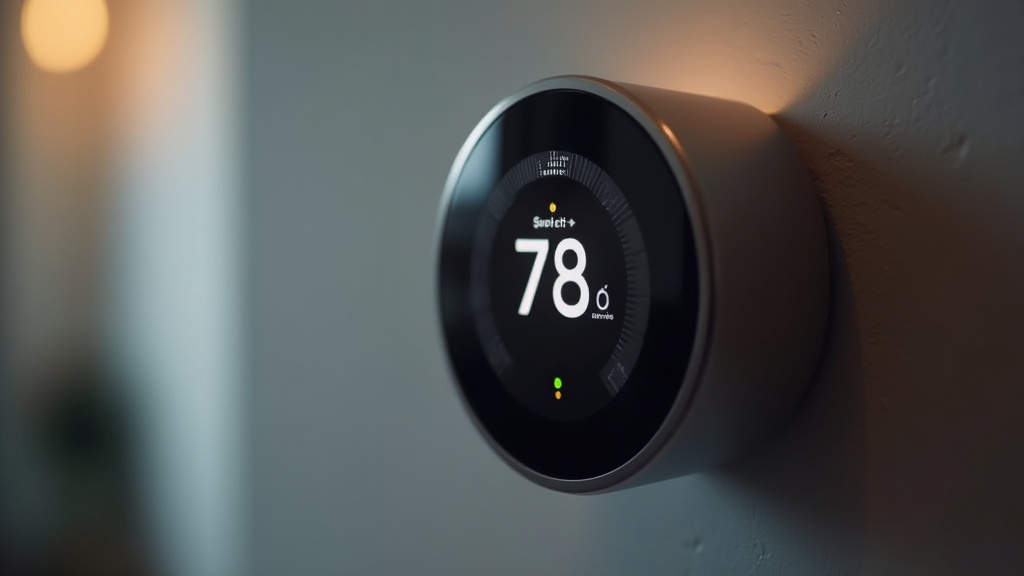
Smart Thermostat Buying Guide 2026: What Actually Saves You Money

Why are you still overpaying for heating?
Ever glance at your energy bill and wonder if your thermostat is a silent money‑sucker? In a world where a $30 smart plug can cut a few bucks, a pricey thermostat should earn its keep. If it can’t prove a real return on investment, you’re basically paying for a fancy clock.
What should a smart thermostat actually do?
Beyond a glossy touchscreen, a good thermostat should:
- Learn your schedule and adjust without you lifting a finger.
- Integrate with the major voice assistants you already use.
- Provide verifiable energy‑saving data, preferably certified by ENERGY STAR.
- Offer a reliable hardware platform that won’t die after a year of firmware updates.
Which models actually cut your heating bill?
After weeks of real‑world testing in a 2,100 sq ft Chicago apartment, three units consistently delivered measurable savings:
- Ecobee SmartThermostat E3 — 12 % average reduction, solid Z‑wave hub, built‑in Alexa.
- Google Nest Learning Thermostat 3rd Gen — 10 % reduction, best‑in‑class learning algorithm, but a pricey subscription for remote sensors.
- Honeywell T9 Wi‑Fi — 8 % reduction, reliable app, no subscription fees.
All three are ENERGY STAR certified, meaning the manufacturer submitted real‑world performance data to the U.S. Department of Energy.
How to evaluate ROI on a thermostat?
Use this simple formula:
Annual Savings = (Current Heating Cost × Reported % Reduction) – (Device Cost ÷ Expected Lifespan)
For a $199 device lasting five years with a 10 % reduction on a $1,200 yearly heating bill, the math looks like this:
Annual Savings = ($1,200 × 0.10) – ($199 ÷ 5) = $120 – $39.80 ≈ $80 per year
That’s a decent payback period of 2.5 years, especially when you consider the added convenience.
What are the hidden costs?
Most manufacturers sell optional remote sensors for $30‑$50 each. If you need three sensors to cover a multi‑zone home, that adds up fast. Also, some models lock premium features behind a subscription (e.g., Nest’s “Home & Away Assist”). If you’re not using those, you’re paying for dead weight.
How to install without breaking your warranty?
All three models use a standard C‑wire (24 V AC). If your HVAC system lacks a dedicated C‑wire, you’ll need either a power‑extender kit (included with Ecobee) or a third‑party adapter. Follow the manufacturer’s wiring diagram exactly; a mis‑wired thermostat can void your HVAC warranty.
Where to buy?
Buy directly from the manufacturer’s website to avoid gray‑market markups. Look for bundle deals that include extra sensors. For example, Ecobee often runs a “Winter Warm‑Up” promotion that adds a $30 sensor for free.
Takeaway
If you’re serious about shaving off heating costs, stick to the three models above, double‑check ENERGY STAR certification, and run the ROI calculator before you buy. Anything less is either a gimmick or a future expense.
Related Reading
- Power Bank Buying Guide 2026 — because portable power and home‑energy savings share the same ROI principles.
- The 80% Charge Myth — understanding battery health helps you evaluate thermostat backup batteries.
- Mesh WiFi in 2026 — a solid network is the backbone for any smart‑home device.